
Safety equipment
Load Restraint
Ratchet straps, transport chain, load binders and the Load Restraint Guide. The right restraint depends on the load's weight and the method used.
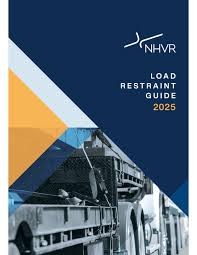 Load Restraint Guide Book$40.00+ GST at checkout
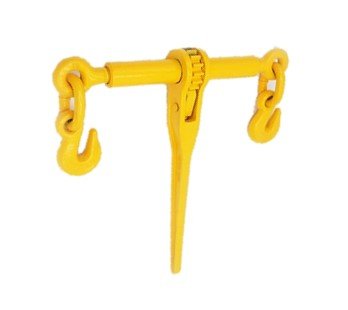 Ratchet Load Binder$65.00+ GST at checkout
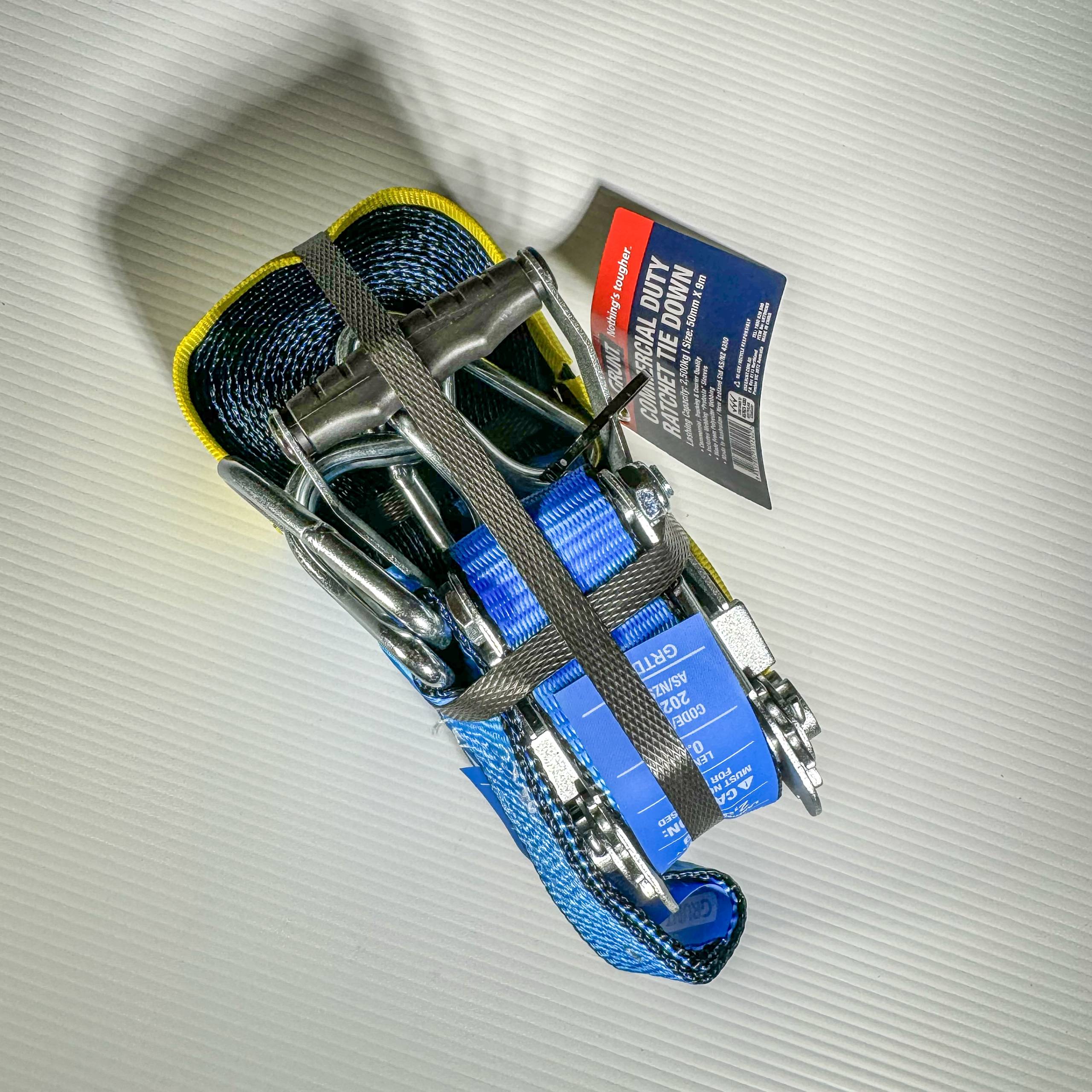 Ratchet Straps$35.00+ GST at checkout
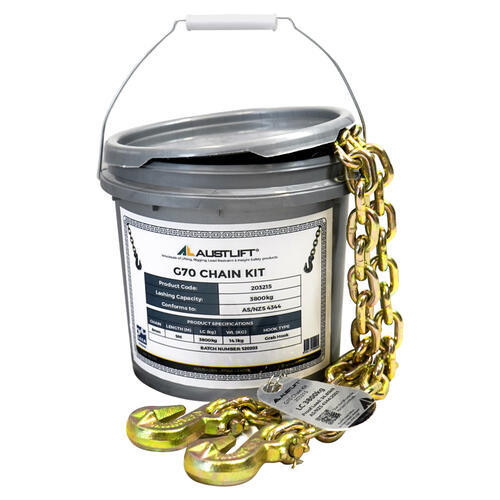 Transport Chain$85.00+ GST at checkout
 Transport Rope$20.00+ GST at checkout
How do I choose the right load restraint?
The performance standard
Under the NHVR Load Restraint Guide, a restraint system must withstand at least 0.8g forward, 0.5g sideways, 0.5g rearward and 0.2g upward. Forward is the largest force and usually decides the equipment you need.
Lashing Capacity (LC) — the number that matters
Lashing Capacity is the maximum force (in kg) a strap or chain system is rated to sustain. It is not the breaking strength (which is higher) and not the pre-tension (which is lower). Match LC to the load:
- For direct restraint, combined forward LC should be about twice the load's weight; sideways and rearward about once each.
- Lashing angle reduces effective capacity — keep direct lashings under about 25° from the deck to use the simple rule.
- Every strap, chain and binder must be marked with its LC; the lowest-rated component sets the whole system.
Strap, chain or rope?
- Webbing ratchet straps — general and lighter loads; carry roughly 5–10 times the tension of rope.
- Rated transport chain + a matched load binder — heavy, rigid or unstable loads (machinery, steel). The binder's rating must match the chain's.
- Rope — only light, low-risk securing. Rope stretches up to about 20% before reaching its capacity and is not suitable as the primary restraint for heavy loads.
Common mistakes to avoid
- Buying straps or chain whose combined LC is below the load — forward restraint needs roughly 2× the load weight.
- Reading the breaking-strength number instead of the LC.
- Unrated chain, or a load binder rated below the chain.
- Using rope to restrain a heavy or rigid load.
The Load Restraint Guide is free from the NHVR (a separate light-vehicle edition covers utes and trailers) and is the authoritative reference — always check the rating marked on the product against your load.